Access to the learning.
Give learners a clearer route into practical work and scientific explanation.

OUR STORY
A learner could understand the science and still struggle to begin, follow the method or turn observations into writing. FIXSTEM grew from asking what would make that whole journey more accessible.
FOUNDER / MOHAMMED BASTHAMI
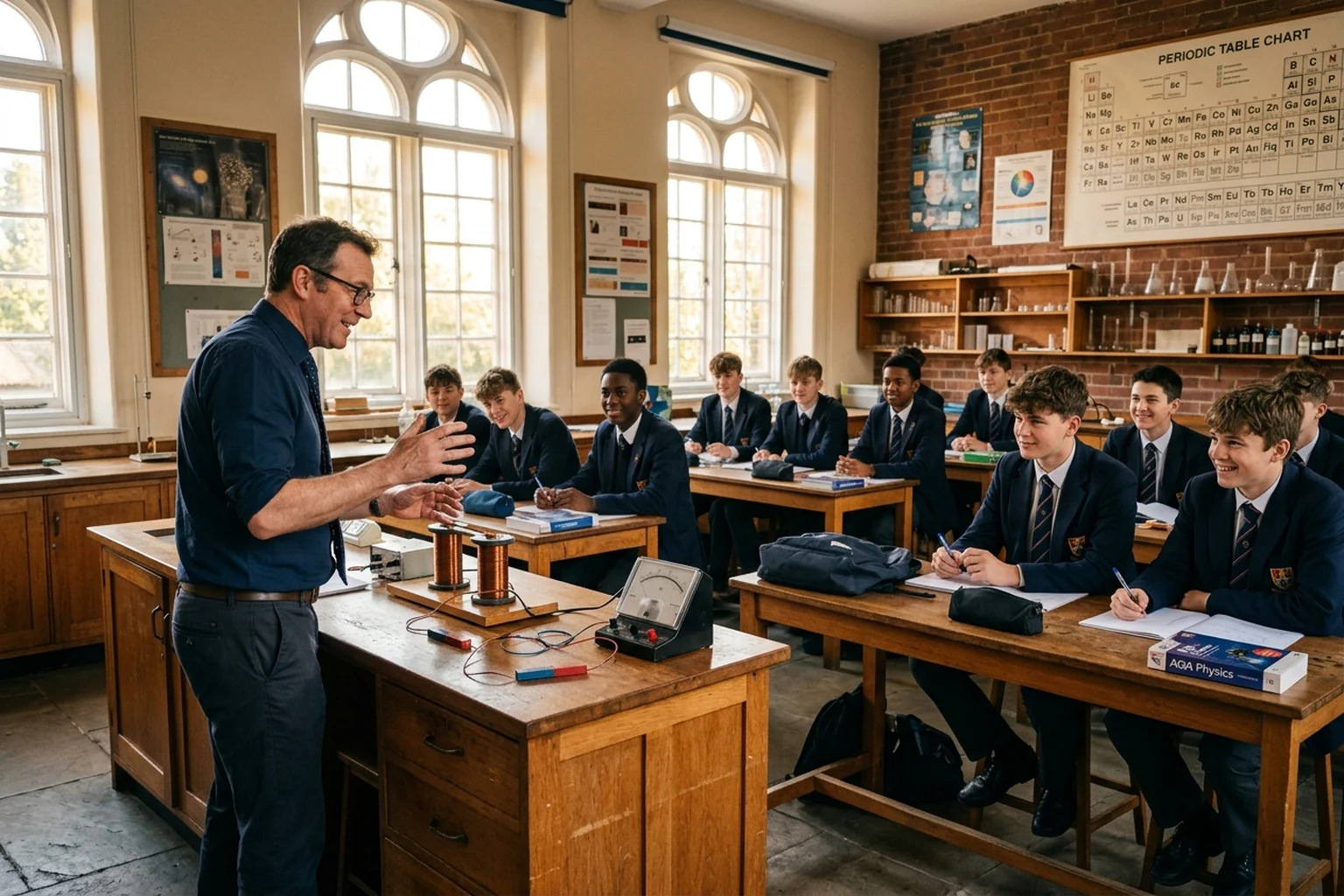
Mohammed’s experience teaching KS3 and KS4 science in UK state schools shaped FIXSTEM around the realities of a busy lab: safety, equipment, pacing, assessment and limited staff time.
His King’s College London PGCE research into supporting dyslexic learners explored chunking, visual scaffolds and structured prompts. The application reports a Distinction for this research assignment.
A First Class BSc in Physics and MSc Physics study at Queen Mary University of London, including machine learning, inform the technical ambition. Specialist SEND assessment and product development remain areas for collaboration.
Founder background described in the FIXSTEM enterprise application. Institutional references describe education and experience, not endorsement or partnership.
Start with SpLD access, especially dyslexia. Build with learners and staff. Extend the approach only where evidence supports it.
Learning reimagined begins with understanding what gets in the way.
THE LONGER VIEW
The long-term ambition is wider participation in STEM. The first step is to test whether better support around a practical makes learning more accessible.
Give learners a clearer route into practical work and scientific explanation.
Work towards school-supported access and meaningful learner choice.
Test adaptation and immersion against learning, wellbeing and teacher usability.
We welcome school teams, SEND specialists, researchers and technical collaborators.
Build with FIXSTEM