Prompt. Measure. Record.
Concise reminders, accessible recording and a clear next action.

THE CONNECTED PATHWAY
The vision is a continuous feedback loop: understand the learner, rehearse the practical, support participation, then use the evidence to shape what comes next.
Three-phase product roadmap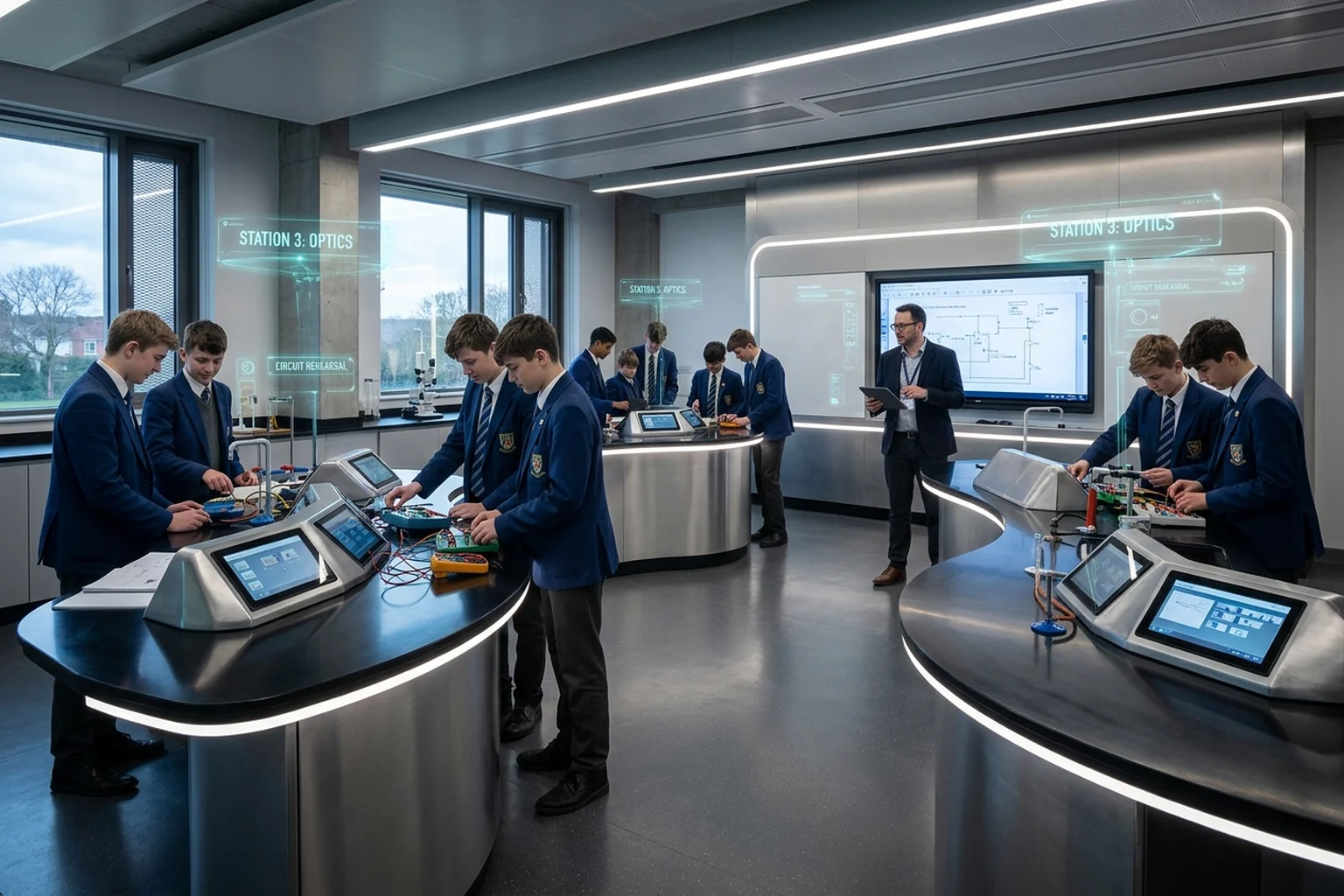
PHASE 01 / UNDERSTAND
An evolving learner profile, grounded in what helps a student access practical science.
Short, playful onboarding activities would explore sequencing, comprehension, pace and working-memory demands. School SEND information, existing adjustments and learner preferences would add context.
Teachers review the profile and adapt support as new evidence emerges. This is an educational design concept, not a clinical diagnosis or a validated cognitive assessment.
Preferences, short tasks and confidence check-ins.
Relevant support needs and adjustments, reviewed by staff.
Spoken instructions · Visual cues · Single steps · Recording frames
PHASE 02 / PREPARE
Teacher-assigned preparation, connected to the practical students will actually do.
The proposed 360° virtual practical room introduces equipment, safety routines and scientific vocabulary. Students rehearse the sequence, then teachers see where a learner may need extra preparation.
Browser-based rehearsal is the starting point. Optional immersive VR is a later research direction: its value must be tested with learners, including comfort and cognitive load.
360° room and VR are planned product features. The interactive example below demonstrates the learning flow.
PHASE 03 / PARTICIPATE & EXPLAIN
In the lab, profile-matched instructions and recording frames help learners keep their place. Teachers retain responsibility for supervision, safety and deciding when support should change.
After the lesson, structured prompts connect results, conclusions, evaluation and GCSE-style practice to that same practical. Work samples and teacher observations build a portfolio over time.
Concise reminders, accessible recording and a clear next action.
A supported write-up, actionable feedback and a next learning goal.
Teachers use evidence to adjust the profile and gradually reduce scaffolds where appropriate.
TRY THE JOURNEY
Explore a working concept using fictional examples. This is a demonstration of the proposed pathway, not a live school account.
Select a preference to see how the proposed profile could change the task format.
Show a single instruction with a progress indicator and optional check-ins. A teacher can adjust this support.
Preferences are not diagnostic results. Your selections stay in this page and reset when it reloads.
Your teacher has asked you to have the circuit checked before switching it on. What should happen next?
An example of readiness feedback, not a complete safety assessment. Always follow your teacher’s instructions.
Read the current on the ammeter.
Look for the reading labelled A. Ask your teacher if you are unsure.At 1 V, the current was 0.10 A. At 2 V, it was 0.20 A.
When the potential difference doubled, the current doubled. In this example, resistance stayed at 10 Ω.
Repeat readings and explain why controlling temperature matters when testing this relationship.
We’re seeking classroom insight, SEND expertise and technical collaborators to test the complete pathway.
Discuss a pilot